



Most women who stop breastfeeding don't stop because the baby couldn't latch.
They stop because the pain didn't get better fast enough.
By the time someone tells them it's normal, they've already given up — guilty, exhausted, and convinced something was wrong with them.
The first two weeks are the part everyone skips when they tell you it's a beautiful experience. Here's what's actually happening, why it hurts, and what most women try.
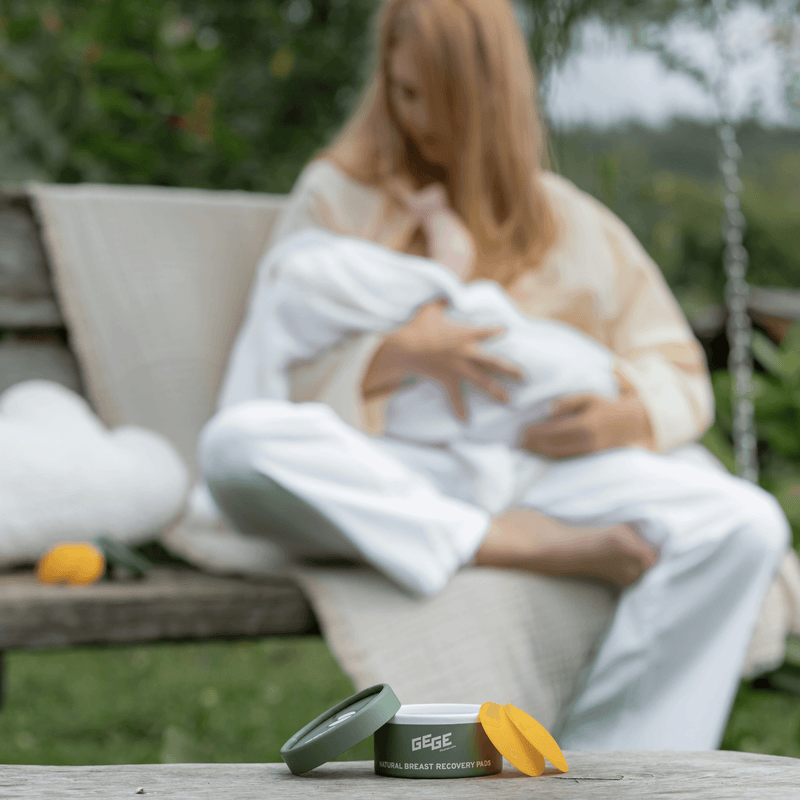
Skin meets a new mechanical job, every two hours.
For most women, sore nipples in the first weeks are not a sign of poor latch or bad technique. They're what happens when sensitive skin is asked to handle frequent friction, moisture changes, and a brand-new pattern of stretching — for the first time, while your body is also recovering from birth.
The skin will adjust. The latch usually does too, as you and the baby learn each other. But the adjustment period is real, it can last one to three weeks, and it can hurt more than anything anyone prepared you for.

Most women describe the first weeks as painful. Many quietly stop because of it.
Reports on early breastfeeding consistently list nipple pain as one of the most common physical complaints in the first two weeks postpartum. It's also one of the most frequently cited reasons women cut breastfeeding short before they meant to.
It's not rare. It's not a sign you're doing it wrong. It's the modal experience of starting to breastfeed — and it's the part that doesn't make it into the leaflets.

What most women try, and where each falls short.
Lanolin cream. Works while it's on the skin. Has to be wiped off before each feed. Reapplying every two hours becomes another job.
Hydrogel discs. Cooling and pleasant. Disposable, expire on the skin, need replacing through the day.
Air-drying. Recommended often. Hard to actually do with a newborn who feeds every two hours and visitors at the door.
Cabbage leaves. Your grandmother was right that they're cooling. Less right that they fix the underlying friction.
What most women say they want is something they can put on once between feeds and not think about until the next one.
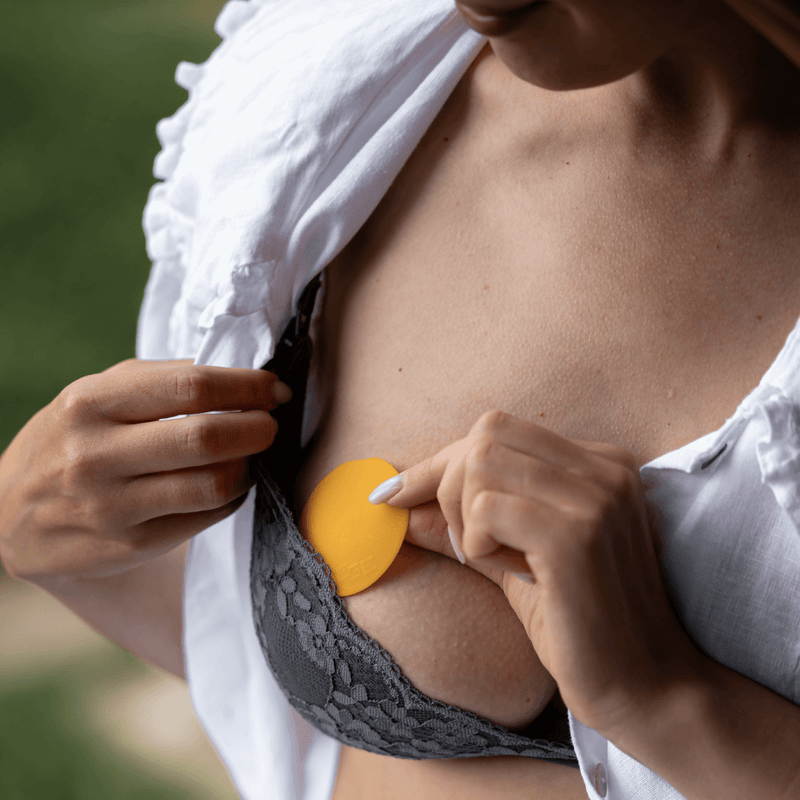
Two beeswax discs. Worn between feeds. Reused for months.
The disc forms a barrier on the skin without a cream that has to be wiped off. You don't apply it, time it, or replace it during the day.
You take it off to feed. Rinse it. Put it back on. That's the loop.
It's not a cure for the first two weeks. It's a way to get through them with less daily friction.
Three steps. That's it.
Place Against the Skin
Wax side directly against the nipple. The disc warms to body temperature and forms a soft, breathable barrier.
Wear Between Feeds
Continuous, gentle protection while you wear it — no creams to apply, no timing to remember.
Rinse and Reuse
Take off to feed, rinse with warm water, let air dry. Reusable for months of daily use.
Practical answers, in their own words.
I tried lanolin first. The wiping-off-every-two-hours thing is what made me stop. These I just take off to feed and put back on. That's the difference.
I had hydrogel discs in the hospital, then ran out at home. Switched to these and didn't have to keep buying replacements.
Honest answer: it didn't make the pain disappear. It made the time between feeds bearable, which was the part I was struggling with most.
Used them for about three weeks. By week four I didn't need them. They paid for themselves vs the cream I was going through.
The four questions everyone asks.
-
They reduce friction and keep the skin from drying out between feeds, which is what causes most of the pain. They're not a painkiller. The pain typically eases as the skin adjusts over the first two to three weeks — these help you get through that window.
-
Two to three weeks, roughly. Some keep using them past that point because they like the feel; most don't need them after the skin adjusts.
-
Yes. Wear them between pumping sessions the same way you'd wear them between feeds. Take off to pump, rinse, put back on.
-
Lanolin needs to be wiped off before each feed and reapplied after. Hydrogel discs are disposable and need replacing. These are reusable for months and stay put — you take them off to feed, rinse, put them back on.
Built for the first two to three weeks.
Most women don't need them after that. If they help, they help. If not, return them.
Get Yours